
If you’ve ever noticed that one cannabis product smells citrusy, another smells earthy, and another has a piney or floral aroma, you’ve already experienced terpenes at work.
Terpenes are natural aromatic compounds found in many plants, including cannabis. They’re responsible for the distinctive scents and flavors you notice when opening a jar or package, and they play an important role in how people describe and compare different products.
While cannabinoids like THC and CBD often get most of the attention, terpenes are an important part of the conversation because they help shape the character of a product through aroma, flavor, and overall profile.
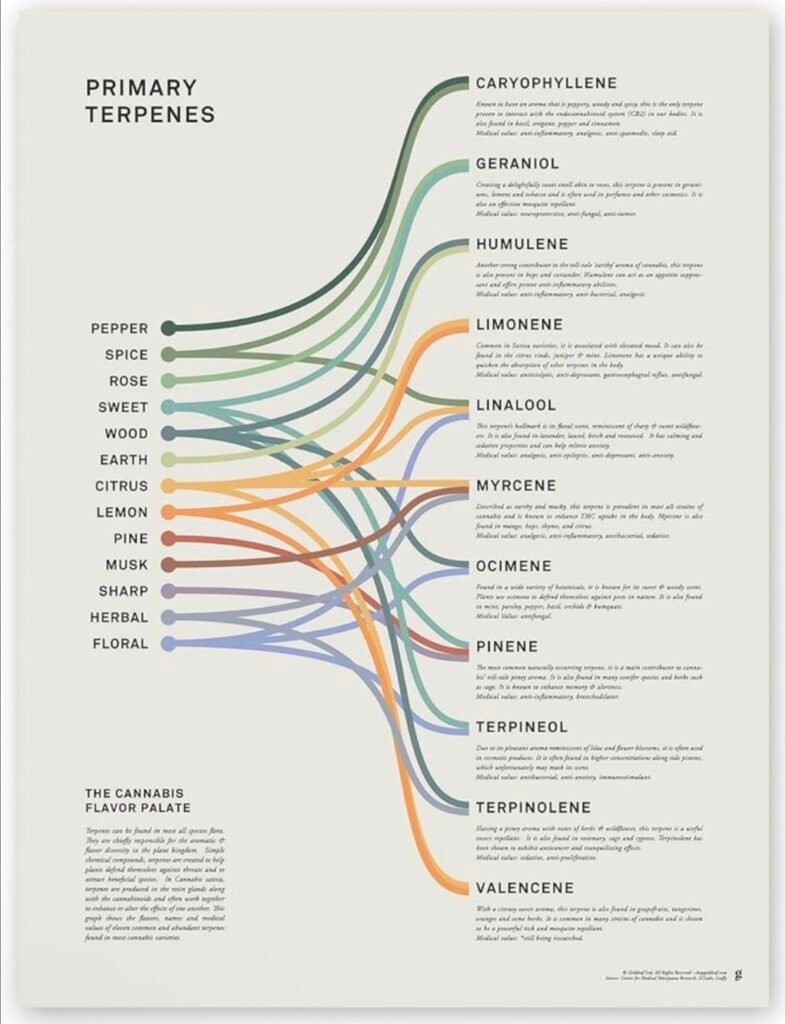
Some terpene-related aroma notes people commonly recognize include:
- Citrus
- Lemon
- Pine
- Floral
- Herbal
- Earthy
- Sweet
- Spice
- Wood
- Musk
Below are some commonly discussed terpenes in cannabis:
Myrcene
Often associated with earthy, musky, or herbal notes.
Limonene
Known for bright citrus aromas like lemon or orange.
Pinene
Recognized for fresh pine and forest-like scents.
Caryophyllene
Often described as spicy, peppery, or warm.
Linalool
Commonly associated with floral, lavender-like aromas.
Humulene
Often linked to earthy, woody, or hoppy notes.
Terpinolene
Sometimes described as fresh, bright, herbal, or slightly floral.
Ocimene
Often associated with sweet, herbal, or citrus-like characteristics.
When shopping, paying attention to terpene profiles can help you understand more about a product beyond THC percentage alone. Aroma, flavor, and the overall profile all contribute to how a product is experienced and remembered.
At Cream of the Crop, we believe education helps customers shop with more confidence. Learning the basics of terpenes is a great place to start if you want a better understanding of how products differ from one another.